A small bathroom does not have to feel cluttered. Towels pile up on the toilet, bottles crowd the sink and every surface seems to be full. The good news is that you rarely need a bigger room. You just need to use the space you already have, especially the walls, more cleverly.
Many homes in Luton have compact bathrooms, especially older terrace houses and smaller flats. This guide explains why storage is hard in these rooms and gives seven practical ideas, plus tips for renters and mistakes to avoid.
To maximise storage in a small bathroom, use the walls and the unused gaps instead of the floor. Good options are a wall-hung vanity, a recessed mirror cabinet, shelves above the door or toilet, storage built into the bath or basin, slim pull-out units and corner shelves. Keep furniture shallow, light in colour and out of the walkway.
Why is Storage Hard in a Small Bathroom?
Older homes, such as Victorian and Edwardian terraces, were not built with modern bathroom habits in mind. They did not need space for lots of toiletries, spare towels, hair tools and cleaning products. Today, we use far more of them.
Large freestanding units take up floor space and make the room feel smaller. The best storage keeps your things out of sight without blocking the floor. That is why smart wall-mounted and built-in storage works so well in small rooms.
7 Ways to Maximise Storage in a Small Bathroom
1. Fit a Wall-Hung Vanity Unit
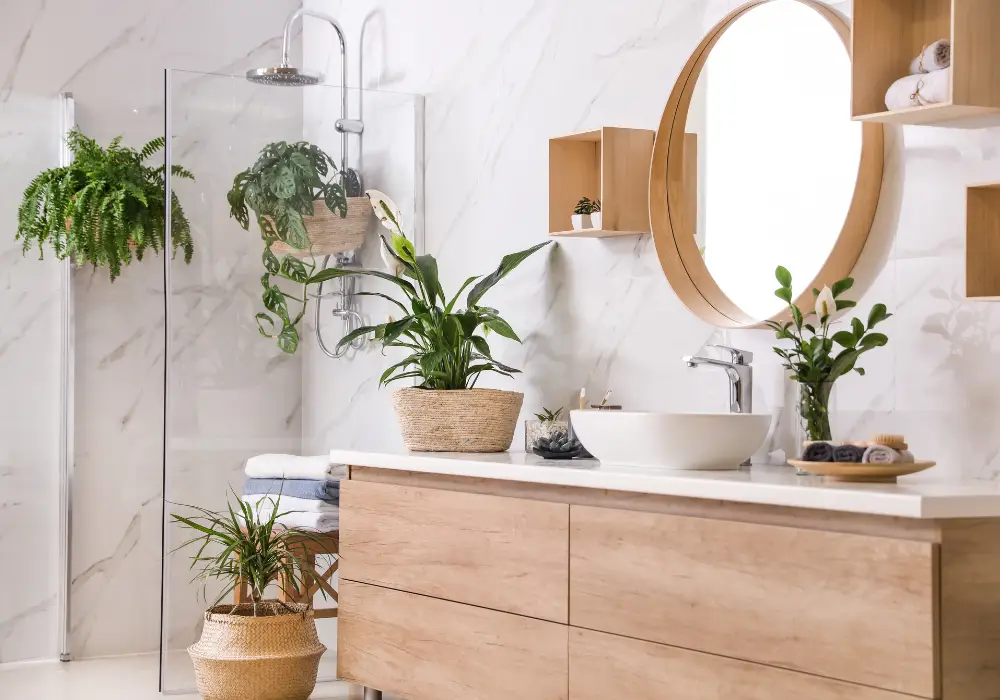
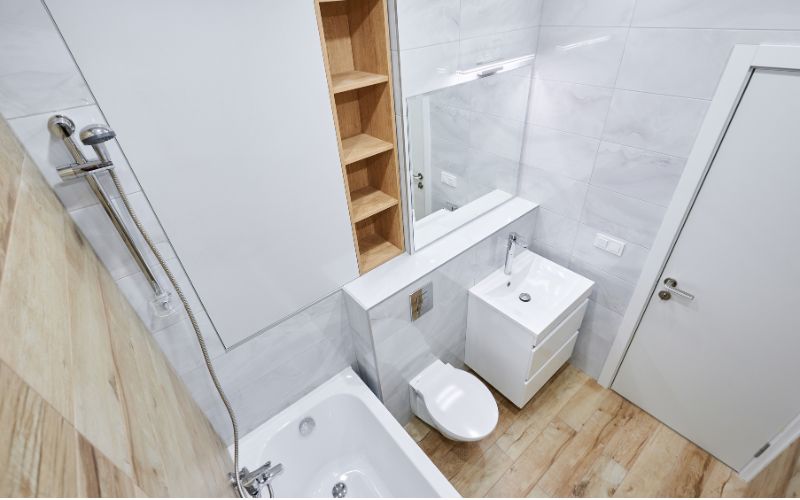
A wall-hung vanity is fixed to the wall and sits off the floor. The open space beneath makes the room look larger, and light can travel across the floor. Choose a slimline unit made for compact bathrooms, and look for drawers rather than doors, so you can see everything at once. Small dividers inside keep razors, brushes and soap from rolling around.
2. Add a Recessed Mirror Cabinet
A normal mirror cabinet sticks out from the wall. A recessed cabinet sits inside the wall cavity, so the door is almost flush with the tiles. Behind the mirror, you get several hidden shelves for toothpaste, creams and medicines.
If the cabinet has lights or a shaver socket, a qualified electrician should fit it, because bathrooms have strict safety zones and the fitting must have the right water protection rating. Check that the wall is deep enough before you buy.
3. Use the Space Above the Door and Toilet
Look at the unused space above the bathroom door and over the toilet cistern. A simple shelf above the door can hold spare toilet rolls and towels, and a slim cabinet over the toilet keeps clutter behind closed doors. Painting the cabinet the same colour as the wall makes it less noticeable.
Keep the shelves shallow and well fixed, and do not store heavy items above head height.
4. Choose Storage Built Into the Bath or Basin
If you have a shower over the bath, some bath panels open to reveal hidden storage behind them. This uses space that is normally wasted. Wipe the area regularly and keep it dry, as moisture can build up in closed spaces.
Replace a fabric shower curtain with a glass screen. Light passes through clear glass, but a curtain divides the room and makes it feel smaller.
5. Add a Slim Pull-Out Tower
Look for narrow gaps, such as between the basin and the wall or beside the toilet. A slim pull-out unit on smooth runners can fit into a space as narrow as 15 cm and hold shampoo, sprays and hairbrushes. This also keeps the sink surface clear.
6. Install Floating Corner Shelves
Corners are often wasted in small bathrooms. Two or three short floating shelves in a corner, above the bath or beside the mirror, give you space for soap, jars and folded hand towels.
Choose solid wood that is sealed for wet rooms, or moisture-resistant boards that can be painted. Avoid cheap particle board, because it can swell and crack when it gets damp.
7. Swap to a Semi-Recessed Basin
A pedestal basin takes up floor space and offers no storage. A semi-recessed basin sits partly inside a shallow vanity unit, so you get a storage space below while keeping the room clear. A shallow unit saves floor space and still gives you a place for towels and toiletries.
Storage Ideas for Rented Flats
If you rent and cannot drill into walls, try these.
- Over-the-door hooks and racks
- Slim freestanding shelving that fits beside the toilet
- Adhesive hooks and shelves that can be removed without marking tiles (check the weight limits)
- A tall, narrow trolley that can be tucked away
- Baskets or boxes on the back of the door
Check your tenancy agreement before you fix anything to the walls, and ask your landlord if you are unsure.
Small Bathroom Storage Mistakes to Avoid
- Leaving things on the edges of surfaces: Put them in cabinets. Clutter makes a small room feel even smaller.
- Choosing dark cabinets: Dark colours absorb light. Lighter woods or white and pale gloss finishes work better.
- Choosing deep furniture: Deep units, around 500 mm or more, can block walkways. Slim units, often 150 mm to 300 mm deep, usually suit small rooms better.
- Ignoring airflow: Moist air can get trapped in closed cabinets. Run the extractor fan during and after showers, and do not store damp towels in closed drawers.
Simple Checks Before You Drill
- Check for hidden pipes and cables: Use a pipe and cable detector before drilling.
- Check your wall type: Brick walls need strong wall plugs. Stud walls need fixings that grip the timber, or proper cavity fixings for lighter items.
- Check door and drawer space: Make sure cabinet doors can open without hitting shower glass or the door frame.
If you are changing the layout, professional bathroom design in Luton can plan storage and floor space together, so you do not lose valuable room to the wrong unit. For wall fixings, pipes and electrics, it is worth asking bathroom fitters in Luton to check the room before you start.
Keeping Storage Clean and Dry
Luton is in a hard water area, so wipe taps, glass shelves and mirrored cabinets dry to stop limescale marks. Clean drawers and shelves once a month with warm water and mild soap, and keep the extractor fan running to protect wood and fabrics from damp.
Frequently Asked Questions
How much does small bathroom storage cost?
It depends on what you choose. Simple shelves cost much less than a made-to-measure vanity or a fitted mirror cabinet with electrics. A designer or fitter can give you a quote for your own bathroom.
Can I add storage in a rented flat?
Yes. Use over-the-door racks, slim freestanding units, baskets and removable adhesive hooks. Check your tenancy agreement first.
What is the best depth for a small bathroom cabinet?
Slim units, often around 150 mm to 300 mm deep, are usually best. They keep walkways clear and still hold everyday items.
How do I stop mould in bathroom drawers and cabinets?
Run the extractor fan after showers, avoid storing damp towels in closed spaces and wipe drawers clean regularly.
Summary
You can make a small bathroom work harder without making it feel crowded. Focus on wall-hung and recessed storage, use gaps and corners and keep furniture shallow and light. Clear floor space lets light travel through the room and makes it feel larger.
Planning a bathroom update? HM Interiors team can offer friendly advice on bathroom renovation in Luton, so you can make the most of your space and your home.